
May Flowers
Feline-looking flora are taking over local yards
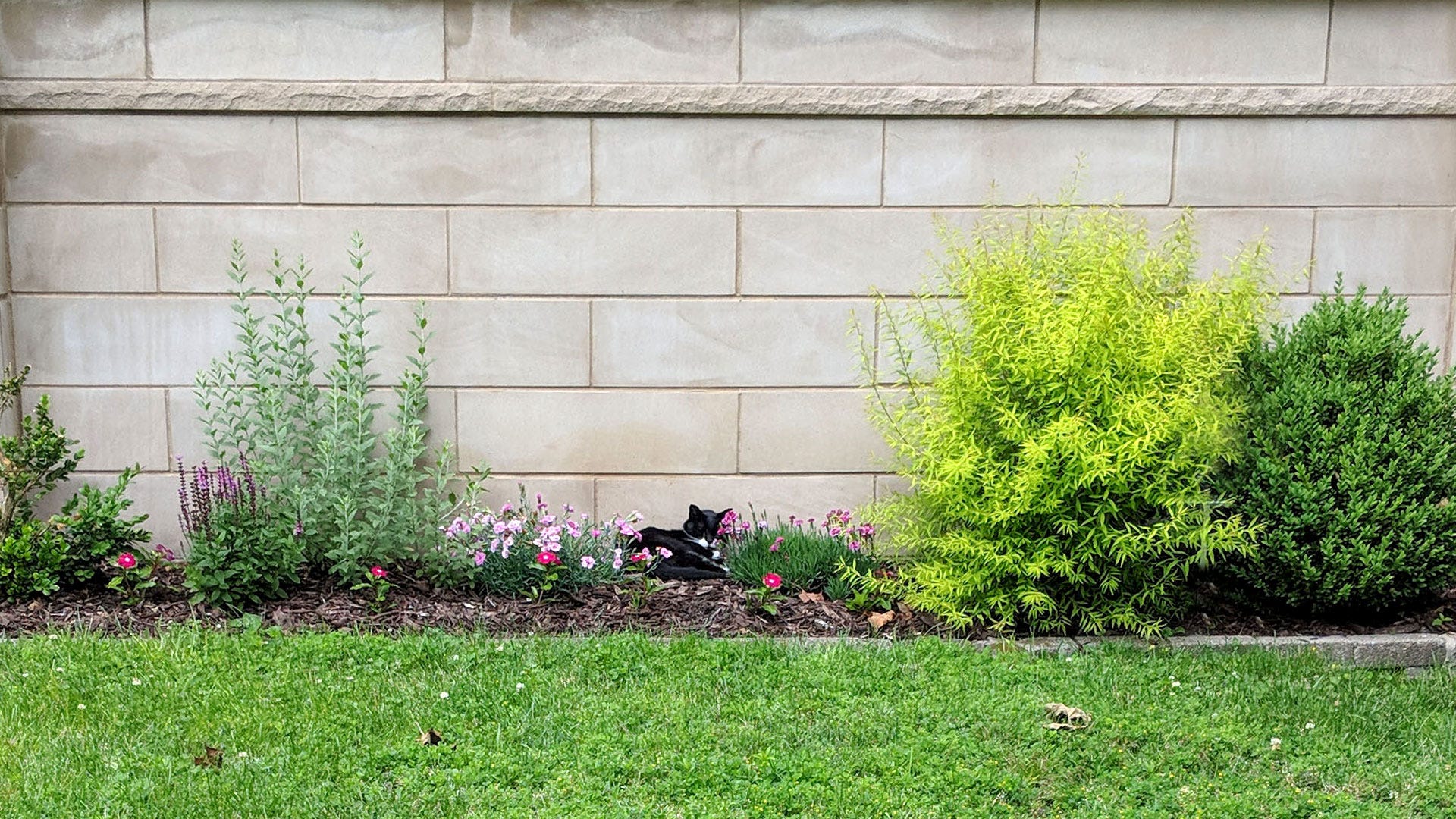
This spring, a strange new plant species has been popping up in yards across the U.S. Nearly everything about this new plant has mystified botanists, horticulturists, ecologists, and even veterinarians.
While the individual plants seem to range in color, size, and soil preference, all plants are characterised by their facial-like flowers and four prop roots that keep the plant upright, not unlike legs.

Botanist Jermany Jermain has been leading a team of researchers focused on uncovering everything there is to know about this strange new plant.
“It’s odd. We have seen plants with ‘mouths’ (Venus flytrap, Dionaea muscipula) and ‘eyes’ (White baneberry, Actaea pachypoda), but never a whole face,” says Jermain, “I mean, shit man, this plant has like a whole ass body. What the fuck is up with that? How is this possible?!”
Because of its anatomical and molecular similarities to the banyan tree (Ficus benghalensis) and its visual resemblance to a domestic house cat (Felis catus), Jermain and his team have dubbed this plant Ficus felis.


During their extensive studies, Jermain and his team mapped out the life cycle of the Ficus felis. Once the seed takes root, the plant begins to grow. Starting with a pair of cotyledons or “seed leaves,” the primary stem soon shoots up from the ground. As the stem gets taller, it begins to bend in one direction. After the stem has bent nearly 90 degrees, the horizontal section of the stem thickens and produces four prop roots that descend back into the ground and create a sturdy base for the plant. At this point, with its prop roots in place, the main stem may break off from its original root system as the “head” or flower develops.

As the plant grows, it develops a mix of tiny leaves and trichomes, tiny hair-like outgrowths, all over the stems, prop roots, and even the flower itself. This makes the plant incredibly soft to the touch but also less palatable to insects and other pests.
The Ficus felis produces a unique two-petaled flower. The remaining flower parts arrange themselves into a unique facial-like structure that gives off a distinctly fishy odor.

Once ready, the plant produces a single 8cm long seed, which is unusually large for a plant of its size. The seed is encased in matted trichome-like material, as if the plant has had a hairball. Researchers assume that the wind or animals take these seeds far from the original plant, as two Felis ficus plants have not yet been seen growing next to each other.

“Now that the species has been identified and named, there is still so much we have to learn about it,” said Jermain. “Namely, where the hell did this thing come from? Outerspace?! Nothing about this makes sense! What the fuck?”
While his team continues to study this phenomenon and determine its origins, Jermain assured us that this plant poses no threats to people or the environment. If you suspect you see any Ficus felis plants in your area, please report any sighting to Jermain’s personal website: JermanyJermainBotany4Real.net
Local Spawtlight


Name: One-Eyed Jack
Job: DMV Clerk
Favorite Holiday: All the bank holidays that I get off
Interests: Demolition derbies, axe throwing, rage rooms, escape rooms, not being asked about my eye, beekeeping
Reach Out!
Questions? Complaints? Requests? Leave a comment and let me know what you think and what you’d like to see in future installments.